Presentation over pattern
Perfect drift beats perfect labeling.
A slightly wrong fly that drifts naturally through the strike zone usually outfishes an exact imitation that skates, drags, or planes out of the lane.
trout.app field guide
Trout do not require a thousand magic flies. They reward anglers who can read the feeding lane, match the right size, and deliver a fly without drag. This guide turns that idea into a practical system you can use on tiny midge hatches, technical dry-fly water, and subsurface runs.
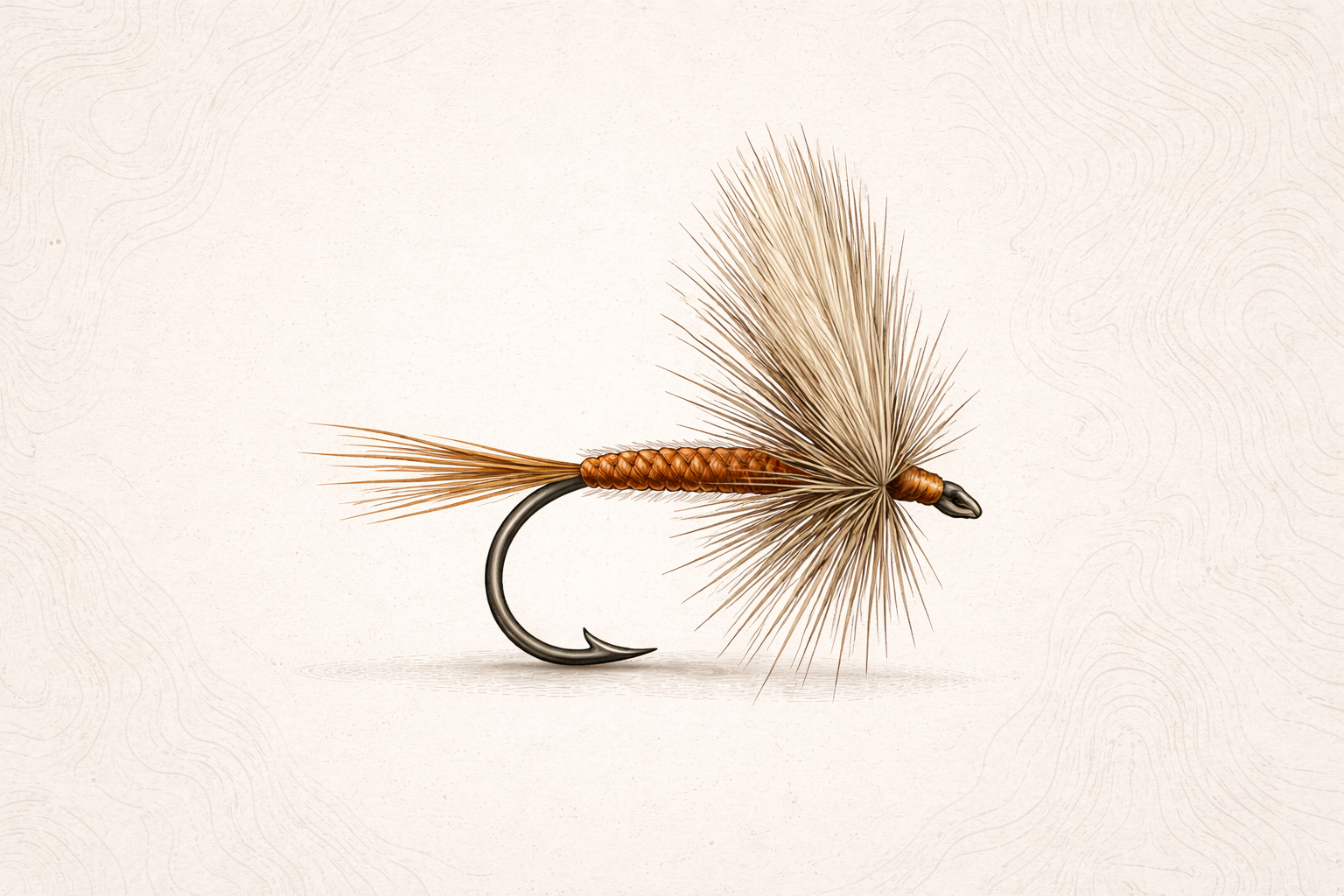
Core thesis
Fly shops and catalogs create the feeling that trout demand hyper-specific, location-only patterns. On the water, that belief usually produces hesitation. The better framework is simpler: identify what lane the trout is feeding in, match the size of the food it expects, and present a fly in a way that behaves like food rather than debris under tension.
The strongest lesson here is not about collecting more patterns. It is about filtering noise. Trout key on position, vulnerability, size, and movement far more consistently than they reward anglers for memorizing every regional pattern name.
That is what makes this approach practical on real water. Each section below answers a clear question: what are the fish eating, where in the column are they feeding, and what presentation gives the fly a believable path through that zone?
Presentation over pattern
A slightly wrong fly that drifts naturally through the strike zone usually outfishes an exact imitation that skates, drags, or planes out of the lane.
High-leverage variable
When a trout refuses your offering, adjust millimeters before you obsess over shade, brand, or a tiny tweak in wing material.
When a fish is feeding steadily, resist the urge to change three things at once. Change one variable, watch the response, then keep narrowing.
Many refusals blamed on the “wrong fly” are really refusals to micro-drag, bad angle, or a fly that sits in the wrong part of the feeding lane.
Selection system
Use the same order every time. It keeps you from jumping straight to color or pattern names before you understand what the trout is actually seeing.
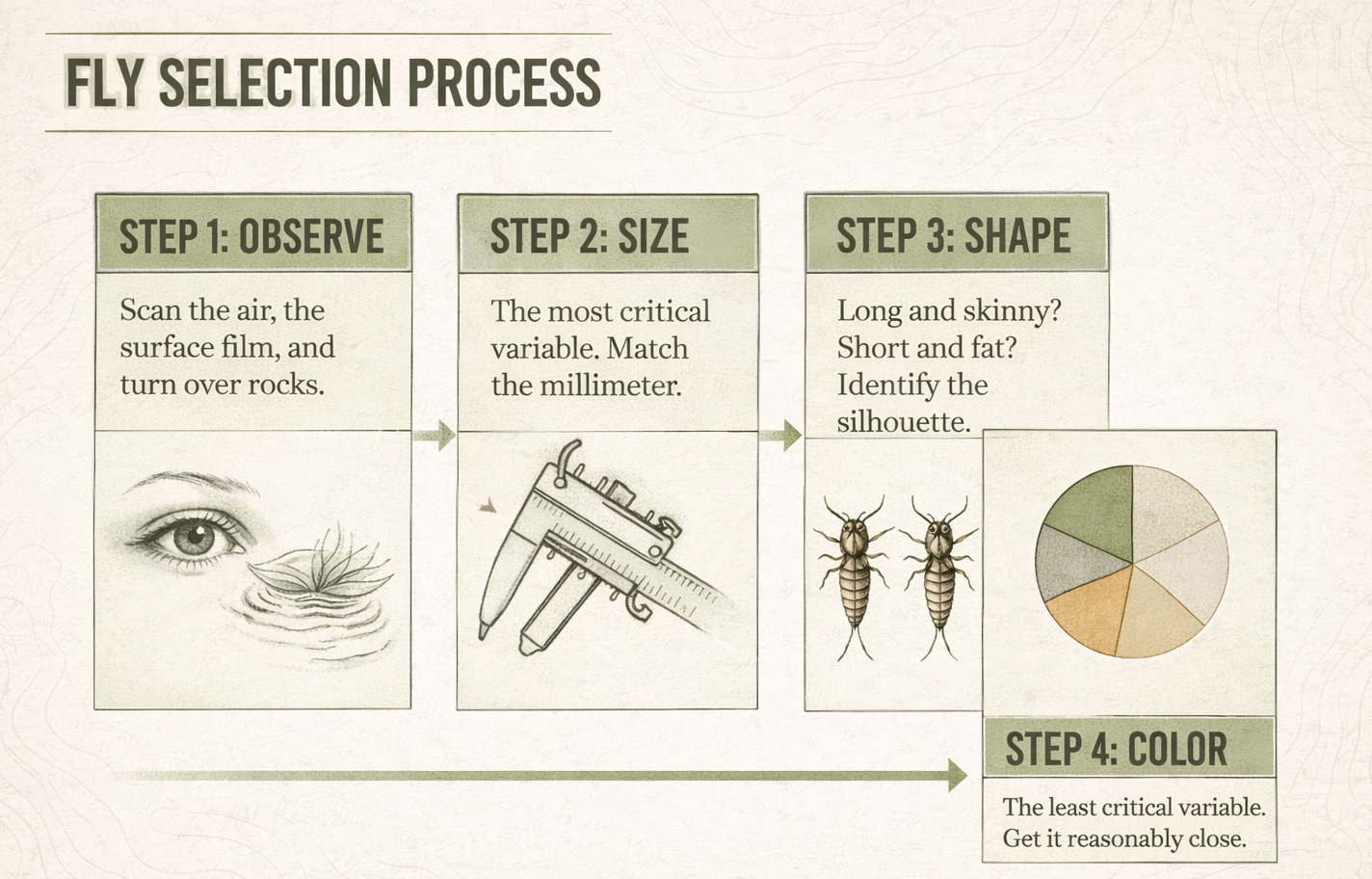
Picking a fly by color first feels decisive, but it skips the variables trout notice sooner: size, silhouette, and whether the fly is even riding at the right depth.
Scan the air, the surface film, and the rocks. Look for adults drifting high, emergers trapped low, and larval forms living near the bottom. A minute of observation can save twenty fly changes.
If you do not see bugs immediately, watch the trout instead. Its rise form, holding depth, and feeding rhythm often reveal the stage before your eyes do.
Get the millimeter range right. Trout often forgive an imperfect imitation if the size profile fits what they are eating. They rarely forgive a fly that is conspicuously too large or too small.
When in doubt, test one size down before you test one shade different. Downsizing solves more technical refusals than most anglers expect.
Is the food item long and thin, short and chunky, winged, tailed, or thread-like? Shape narrows the field quickly once size has done most of the work.
This is also where you choose stage. A larva, pupa, cripple, and fully emerged adult may all belong to the same hatch, but they ask the trout to feed in very different ways.
Color still matters, but it should fine-tune the match instead of driving the first decision. Get it reasonably close, then spend the rest of your effort on drift and placement.
On technical water, color often becomes a confidence variable for the angler more than a make-or-break trigger for the fish. Treat it accordingly.
Pattern economy
The easiest trap in fly fishing is buying endless patterns that all solve the same problem poorly. Many classic drys and generic attractors cover a wide range of insects if you own them in the right size spread.
The practical move is to keep a compact set of trusted profiles, then stock those profiles across the full size range you actually encounter. That gives you flexibility without building decision fatigue.
This matters even more on difficult rivers where one insect family may appear in several different size bands over the course of a season. A disciplined box lets you adapt without re-learning your whole system every time the fish get picky.
Field note
Avoid paralysis by analysis. Buy fewer patterns, but carry them in a wider spectrum of sizes.
| Priority | Best investment | Why it matters |
|---|---|---|
| 1 | Core pattern in multiple sizes | Lets one silhouette imitate several food forms. |
| 2 | Emerger and cripple variants | Improves success when trout reject fully formed adults. |
| 3 | Color variations | Helpful once size and position are already correct. |
Year-round insects
If you are staring at tiny feeding clues and the fish seem selective, midges should be near the top of your list. They stay relevant across seasons, remain one of the few dependable winter hatches, and can make up a large share of a trout’s daily food.
That combination makes them central to both summer technical fishing and winter survival feeding. Trout that ignore bigger offerings often are not “off.” They are simply locked on food forms so small and so numerous that your fly has to enter the lane with much less drama.
A simple rule still holds: if trout are focused on something microscopic and you do not see obvious tails, assume midge until you prove otherwise.
Tiny bugs, tiny eats, and no pronounced tails usually point toward midge forms.
Larva, pupa, and adult midge patterns deserve permanent space in the box.
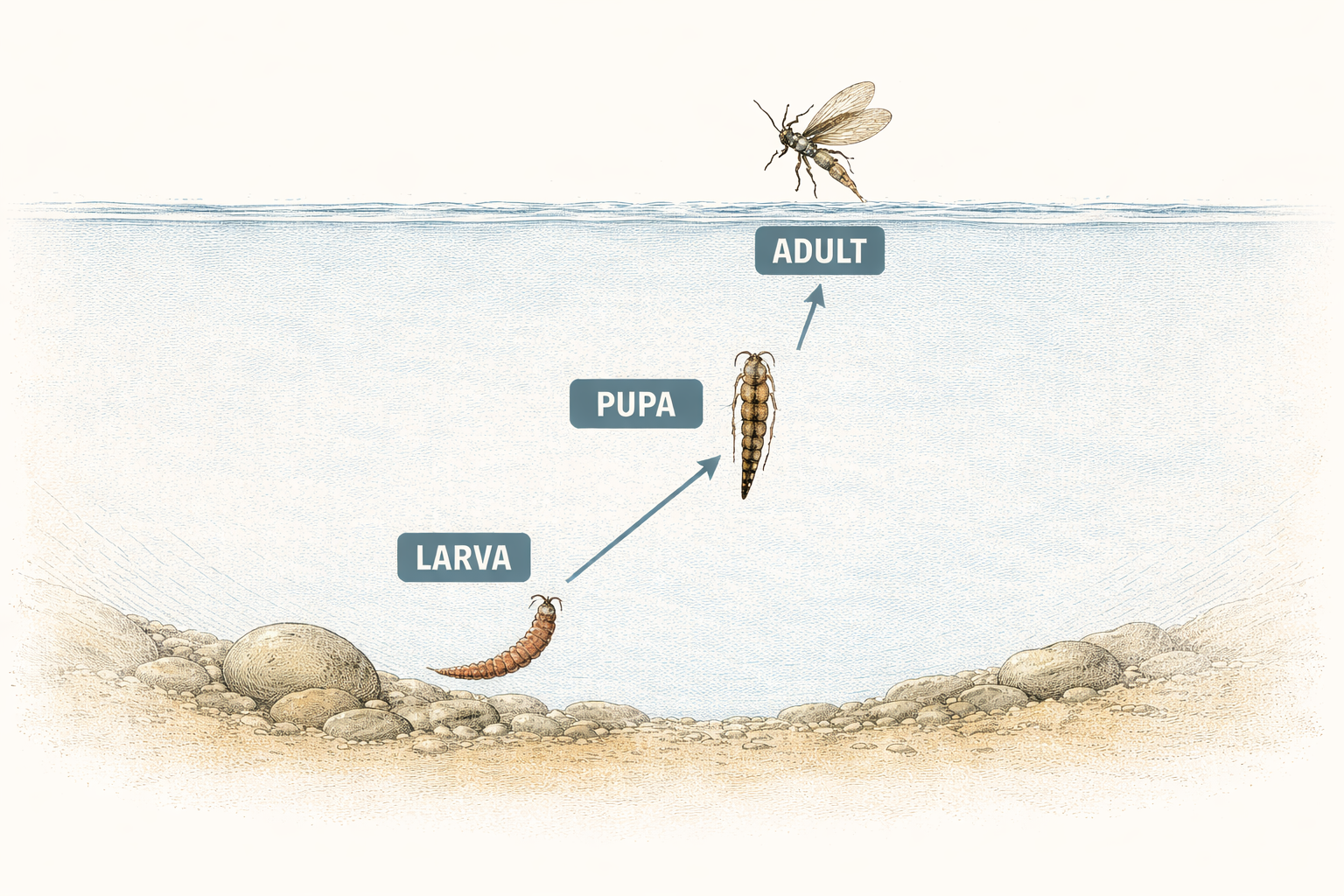
Fish this near silt, seams, and the softer bottom zones where bloodworms and other larval forms collect.
Common pattern logic: slim, simple, low in the column.
As pupae rise, they become extremely vulnerable. This stage often drives technical feeding behavior.
Common pattern logic: ascending profile, slight sheen, little movement needed.
Adults matter when the fish commit to the surface, but not every rise is an adult rise.
Common pattern logic: sparse, tiny, and easy to see only with a support fly or calm water.
Surface clues
A common mistake is seeing surface activity and assuming the trout wants a high-floating adult. Often the fish is actually feeding just under the film, where emergers collect and struggle. The difference can be subtle, but it changes both pattern choice and presentation angle.
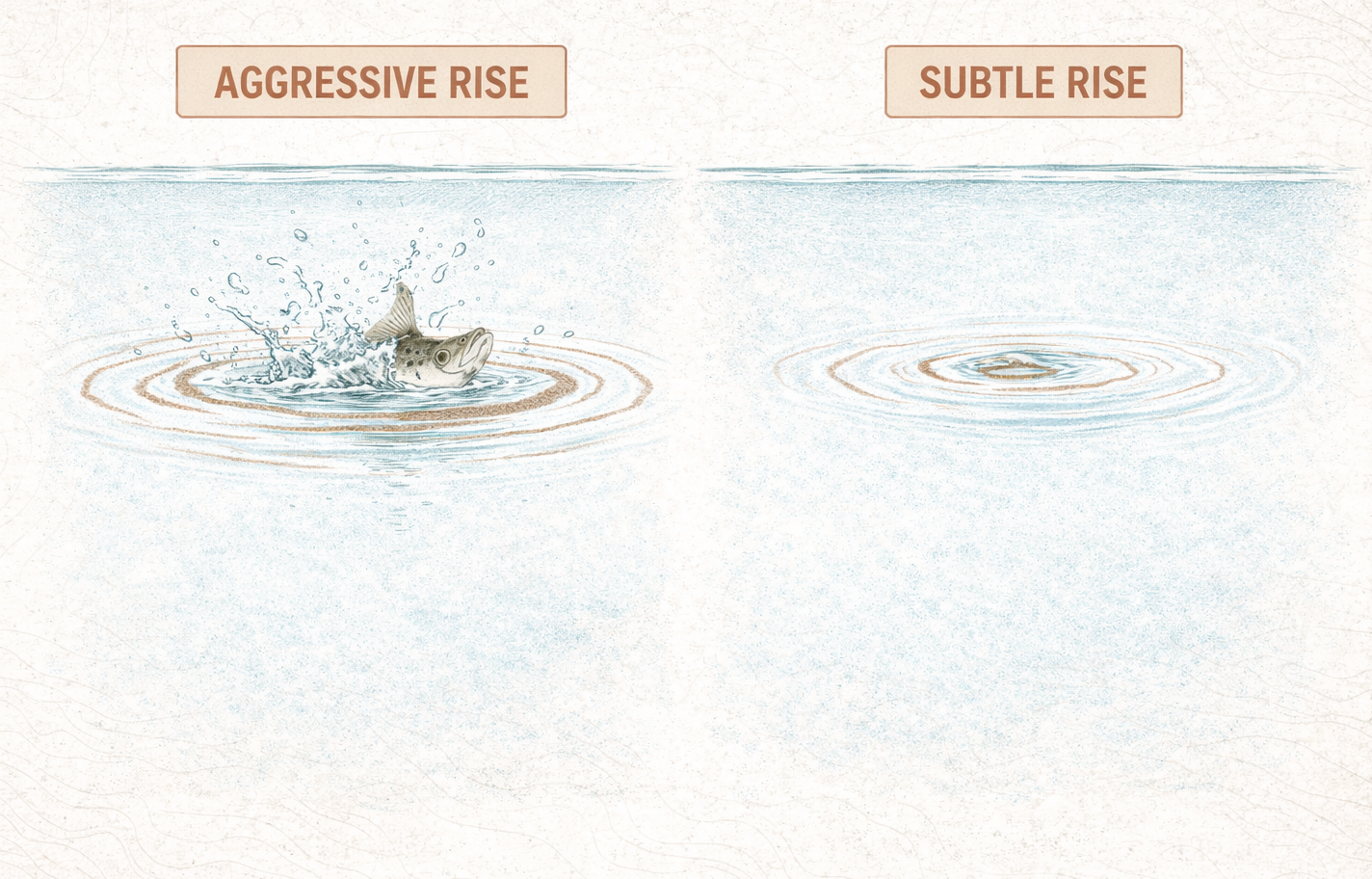
Think splash, aggression, and a fish breaking harder through the film. That usually means the trout is attacking fully emerged insects riding on top.
Fish next: adults, duns, or visible cripples riding high enough to track.
Think soft rings, a dorsal or tail tip, and almost no violence. The fish is often cruising just under the surface and inhaling insects trapped in the film.
Fish next: emergers, low-riding cripples, or patterns pinned in the film.
High-odds patterning
During a heavy hatch, trout do not always want the prettiest adult. They often want the easiest meal. A cripple fly suggests an insect that cannot clear the surface, which creates a stronger predatory cue than a healthy bug drifting away cleanly.
That is why cripples stay relevant even when you see healthy adults on the water. Trout are not grading entomology samples. They are choosing the most vulnerable target moving through the lane.

Technical dry-fly setup
When trout are eating tiny flies in flat or moderate water, the rig must land softly and behave naturally. Longer leaders and finer tippet buy you that slack and subtlety, but they also demand a calmer casting stroke.
The goal is not just to reach the fish. It is to arrive without kicking the fly over, without straight lining the tippet, and without dragging the target fly as soon as it touches down.
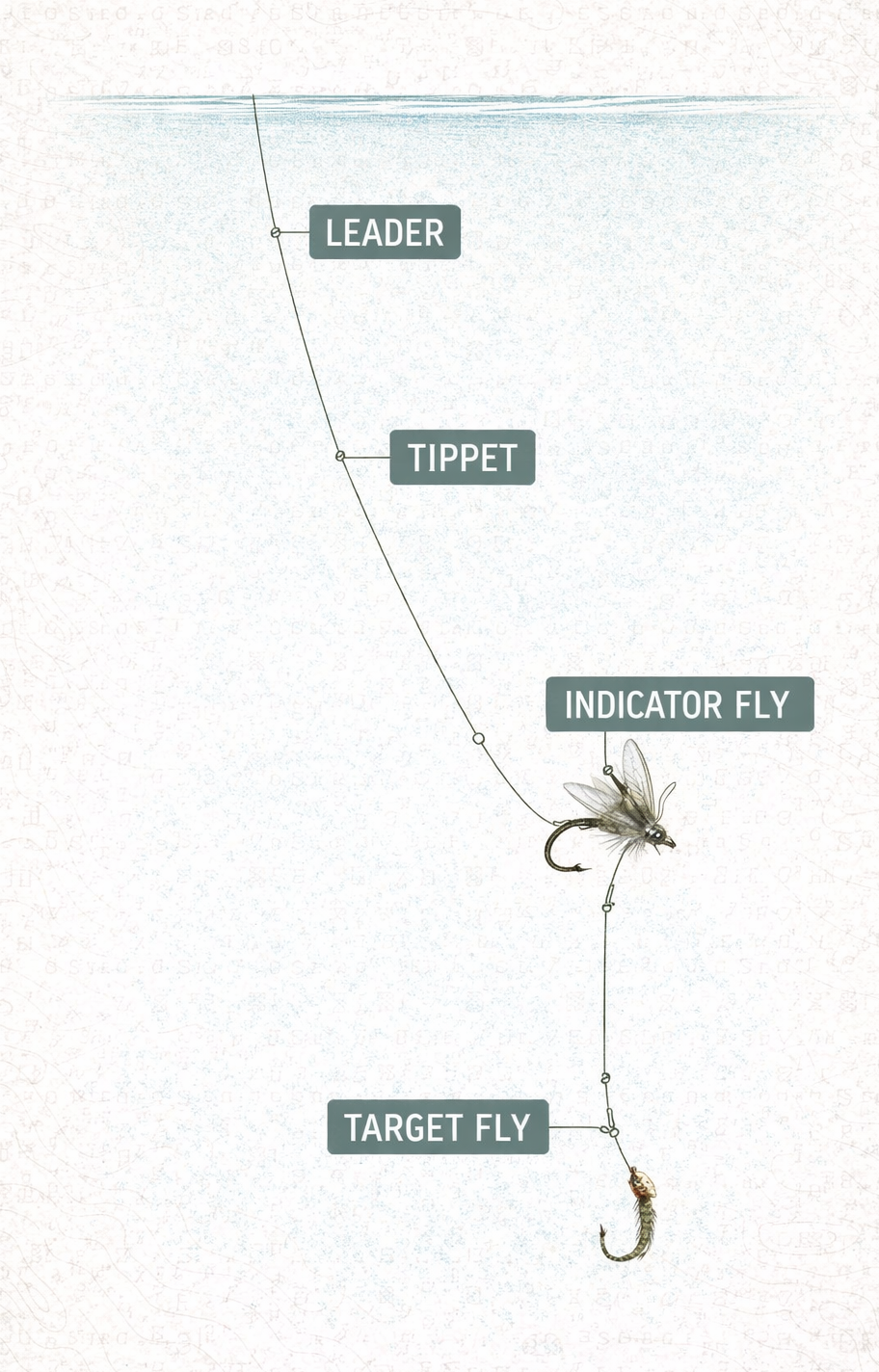
Do not fix poor turnover by powering the cast harder. That usually makes tiny-fly problems worse by landing the system tight and hot.
Timing
Small surface eats often fool anglers because the visual cue arrives before the fish has truly loaded the fly. You see mouth, movement, and disappearance, then react while the trout is still closing and tipping down.
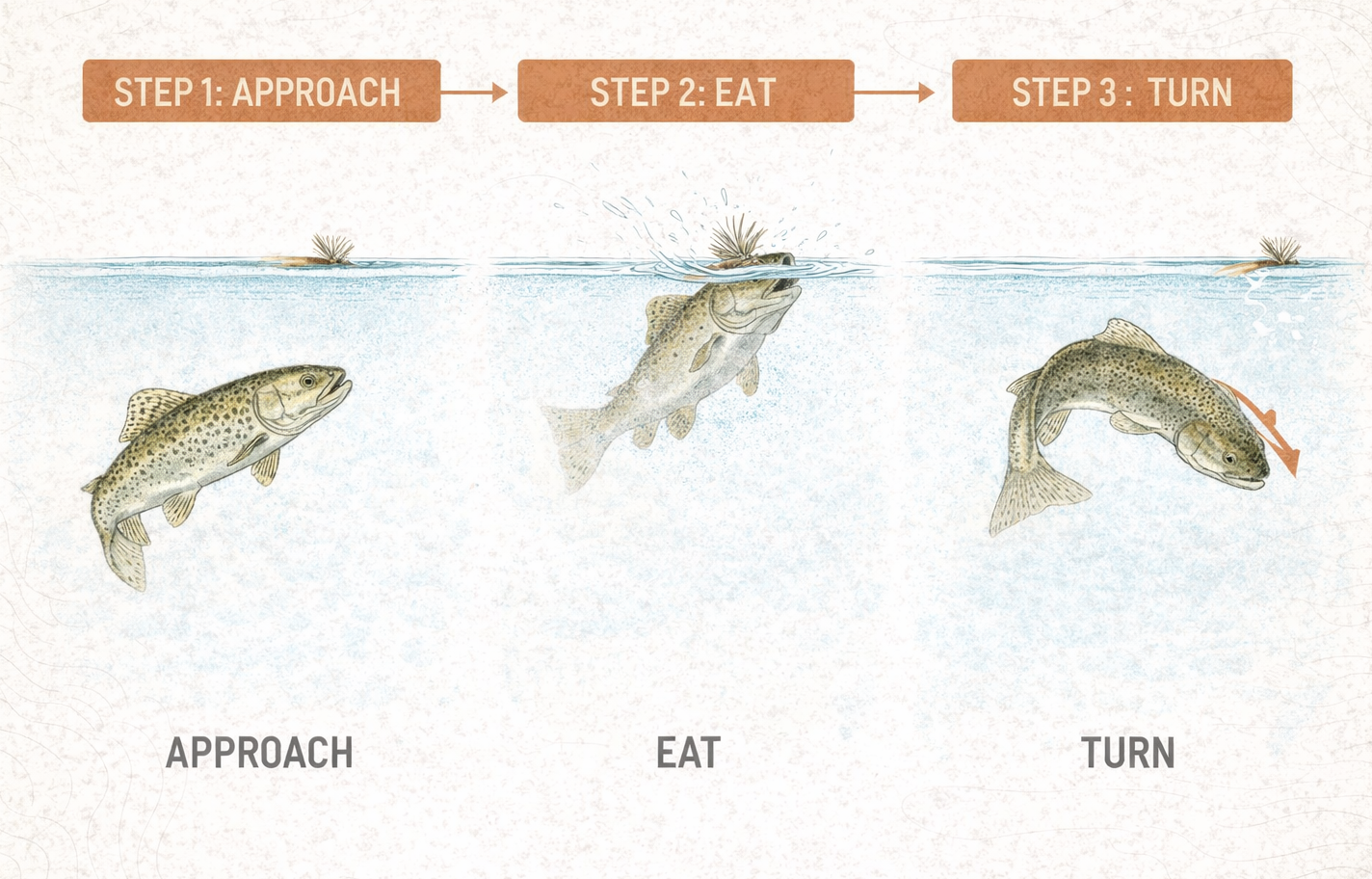
Do nothing. The fish has not committed yet, even if the mouth is already near the fly.
Still wait. On micro dries, the fish often needs extra time to close, tip, and turn.
Make a firm, smooth lift. No yank, no snap, and no panic reaction.
Runs and currents
Runs hold quality trout because they combine depth, current, oxygen, and food. They are also where bad rig physics gets exposed. Fast surface current grabs your line and drags the fly horizontally while the fish stays lower in slower water.
Add bottom vegetation or broken rock, and a standard nymph rig starts behaving like a snag delivery system. The answer is not always more weight. Often it is better weight placement.
In other words, the problem is usually not “getting down.” It is getting down while preserving a drift that still looks edible once the flies reach depth.
The challenge
Surface current accelerates the line while bottom structure eats the rig. Free drift becomes a rigging problem before it becomes a fly-choice problem.
Drag control
The real comparison is not just sink rate. It is whether the flies continue to move like food once they are near the bottom. Traditional tandem rigs often arrive at depth only to start skating, sweeping, or plowing into structure.
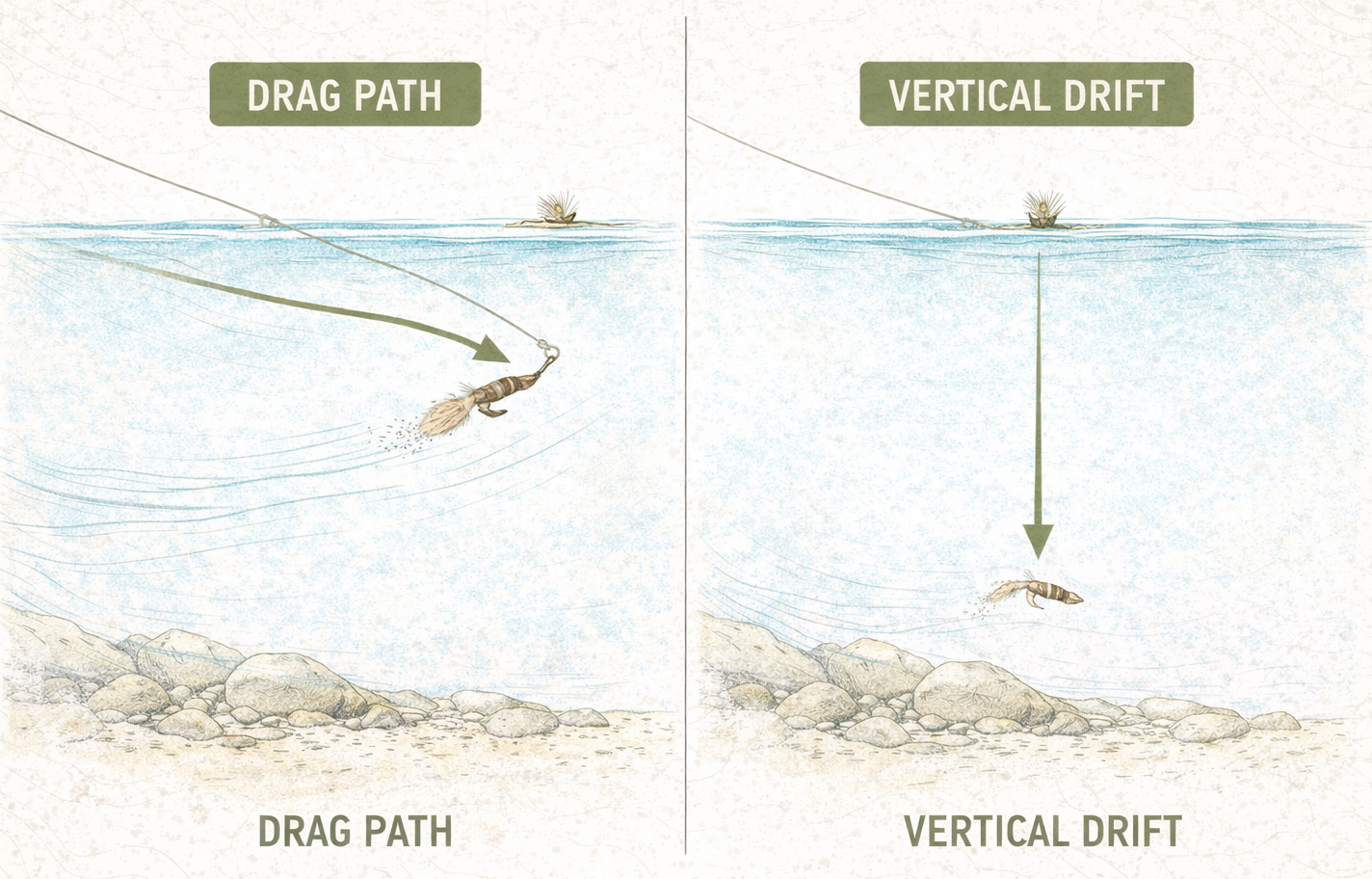
Weight, line tension, and the flies all share the same drag angle. That creates a snag zone and pulls the offering laterally instead of letting it hover naturally above structure.
Weight drops vertically below the flies, which gives the tags more freedom to drift. You maintain sensitivity, reduce horizontal sweep, and sacrifice the cheap split shot before the tied flies.
Rig mechanics
The bounce rig works because each section has a distinct role. The main leader carries the system, the tags let the flies ride freer, and the bottom weight takes the abuse. Once you see those roles clearly, the rig is easier to tie and much easier to troubleshoot.
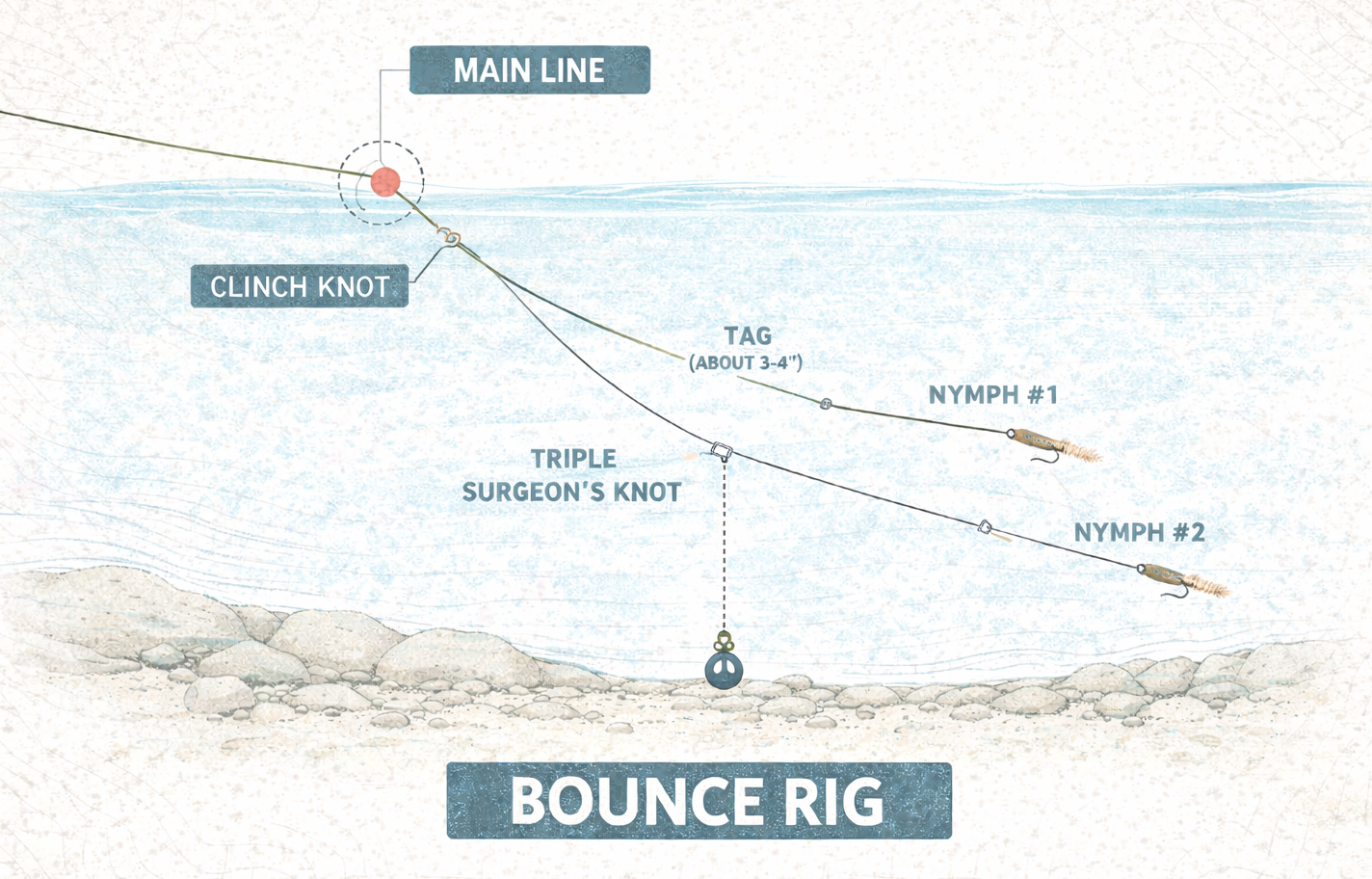
Keeps the system dropping more vertically through the run.
Hold the flies on short horizontal extensions so they drift freer than the weight.
Creates spacing between flies and the sacrificial bottom weight.
If the rig snags, the inexpensive weight breaks off first and saves the tied flies above.
If you keep hanging bottom with the whole system, shorten the tags or reduce the depth between the lowest fly and the shot before rebuilding the entire rig.
Travel principle
It is easy to overestimate how specialized trout become once the setting gets famous or the species gets rare. The real biological pattern is more forgiving. Trout across different waters still feed on recognizable food groups: midges, scuds, leeches, streamers, and common aquatic insects.
That does not eliminate local nuance. It does mean a well-presented basic fly often beats a suitcase full of specialty patterns when you travel.
The point is not that every destination fishes the same. The point is that familiar food categories and solid presentation give you a high-percentage starting point almost everywhere trout live.

High-country fish still eat common small forage, including midges and compact aquatic insects.
Large, dramatic trout still reward streamer and baitfish logic more than magical pattern lore.
Even rare fish stay tied to ordinary prey forms that basic boxes already cover.
Aggressive feeders often prove how far presentation and familiar food categories can take you.
Quick-reference cheat sheet
Use this section as a standalone reference when trout start feeding, refusals begin, or you need to simplify a confusing session fast.
FAQ
Start with observation, then match size, shape, and color in that order. If you keep the process consistent, you stop wasting time chasing pattern names before you know what the trout is feeding on.
Trout often reject offerings that feel obviously out of scale. Color can refine the match, but the wrong size changes the fly’s whole profile and presence in the feeding lane.
There is no single winner, but small midge larva, pupa, emerger, and sparse adult patterns deserve first consideration because midges remain relevant even when larger hatches disappear.
Look for quiet surface rings, dorsal fins, or tail tips instead of explosive rises. Those clues often mean the fish is feeding just under the film rather than smashing adults on top.
Cripples combine visibility and vulnerability. A trailing shuck and collapsed wing posture make them look trapped, which gives trout more time and confidence to eat them.
They usually strike too early and cast too aggressively. Small flies need lighter landings, finer tippet, and more patience after the eat.
Use bounce-rig logic when you need better bottom contact, cleaner vertical drift, and a way to keep flies above snags in structured subsurface water.
Sometimes local nuance helps, but the foundational food groups stay familiar. Midges, leeches, scuds, and streamer logic still travel surprisingly well when presentation is right.
Conclusion
Fly selection still matters, but it sits underneath the bigger physics of trout feeding. If you read the lane correctly, match the right size, fish the vulnerable stage, and preserve a clean drift, your odds improve across dry flies, midge work, and subsurface presentations alike.
The useful simplification is this: perfect drift + right size > exact pattern match. Build your decisions around that principle and your box, your rigging, and your confidence all get lighter.
Related resources
These internal-link placeholders are positioned as the natural next steps after a reader understands the core system. They should feel like guided follow-through, not generic “read more” boxes.
Use this after the selection formula to convert “match the size” into a faster on-river decision.
Coming soonFollow the midge section with a dedicated guide to larva, pupa, adult patterns, and seasonal rigging.
Coming soonExpand the bounce-rig material into a broader reference for indicators, tags, shot placement, and depth control.
Coming soonTurn observation into preparation with a planning tool that maps bug timing, likely size ranges, and seasonal expectations.
Coming soon